
Algonquin Directory Collections by Era
The strongest Algonquin city directory trail starts with county-wide works and then moves into suburban reverse directories. The McHenry County Historical Society resources identify an 1877 directory, an 1885 county history, and an 1892 Ogle plat book with a Historical Directory. These works may arrange people under township, village, trade, or post-office headings. A missing modern village heading does not end the search.
| Collection | Years | Where Held | Access |
|---|---|---|---|
| McHenry County Directory | 1877 | MCHS and Woodstock Archives | Digital scan; indexed route |
| County history and directory | 1885 and 1892 | MCHS | Collection research |
| Woodstock-area directories | 1916 start; scattered through 1990 | MCHS | In person; gaps |
| Haines Far North Suburban Criss-Cross | 1977-forward | MCHS | Reverse address research |
| Federal census microfilm | Selected 1840-1930 schedules | MCHS and AAPLD | Reading room or licensed database |
| Algonquin newspapers | Early 1830s abstracts; 1966-forward holdings | AAPLD and MCHS | Index and issue images |
Coverage is not an annual run. MCHS notes a 1916 start for Woodstock directories, issues for 1935-36, two or three issues per decade through the 1970s, then 1980 and 1990. Those dates are regional leads, not proof that every Algonquin household appears. Ask which suburban and town sections each volume covers.
Algonquin Directories Start Countywide
The 1877 Biographical Directory is more than a surname list. Its scan includes a map, county history, village and town descriptions, businesses, officers, and societies. It gives a dated name-and-place snapshot. Search the scan, but cite the page because optical text can misread initials, old type, and faint surnames.
The 1892 Historical Directory adds a resident's business, township or village, post office, birth year, nativity, and arrival in the county. It can connect a person to a rural place before numbered addresses became stable. The 1885 history adds biographies and context, though its selection was never a full resident roll.
The captured 1877 directory record opens the county scan.
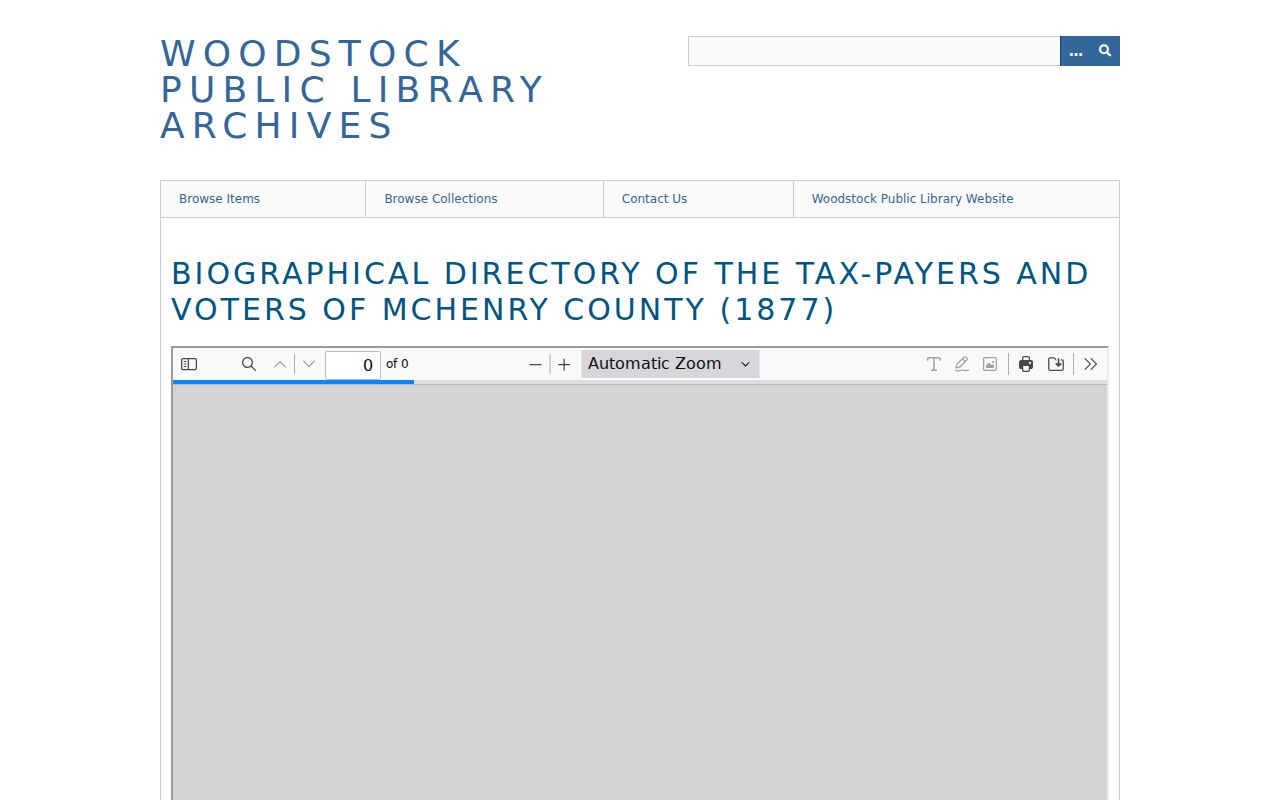
The catalog is the doorway. The scanned page and county or township heading supply the evidence worth saving.
AAPLD Algonquin Genealogy Access
The Algonquin Area Public Library genealogy resources combine local help with licensed databases. Ancestry Library Edition is available in the library. HeritageQuest includes census material, local histories, PERSI, and pension or bounty applications. Fold3 includes Chicago city directories from 1839 through 1923. FamilySearch affiliate access and WorldCat help locate material held elsewhere.
A Chicago title does not prove that an Algonquin address was printed in it. Test Algonquin, Algonquin Township, Cary, Lake in the Hills, and known post-office labels. Then move to the local shelf when the regional run stops. A trained librarian offers a 30-minute genealogy consultation for help with access rules and holdings.
The captured AAPLD genealogy page shows the current starting points.
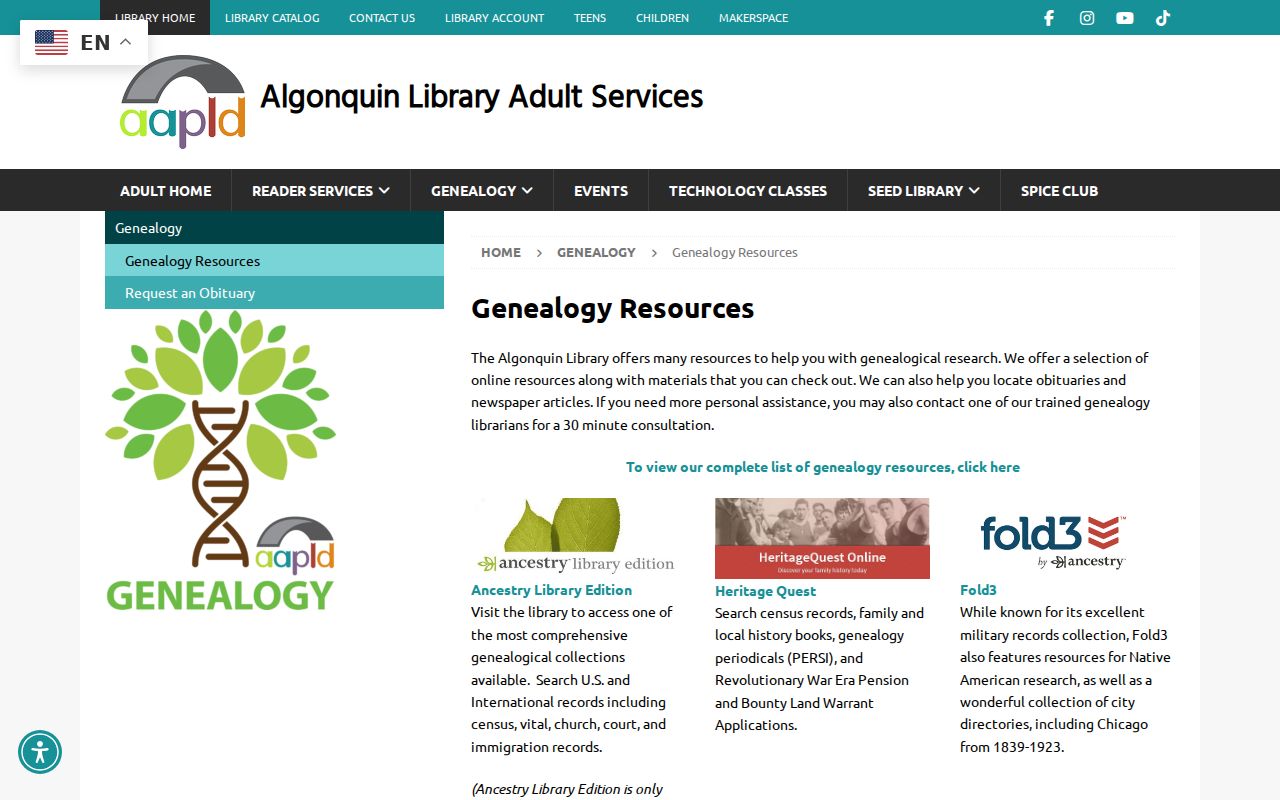
Database rules vary, so confirm whether a card or in-library session is required.
Read an Algonquin Directory Entry
A city directory entry is a snapshot for one publication date. Record the title, year, publisher, place heading, and page. Transcribe the line as printed, including initials. A name may be followed by a spouse or household link, address, business or trade, post-office label, and cross-reference. Never expand a symbol until the volume's own key confirms it.
| Name | Surname-first spelling, initials, variants, and household association |
|---|---|
| Place | Street and number, village, township, or post-office label |
| Work or civic note | Trade, business, office, or society if printed |
| Cross-reference | Page pointer, symbol, or linked address entry |
| Page context | Publication, year, section, page, and nearby entries |
Photograph the page and abbreviation key. Compare nearby issues before treating a move or disappearance as fact. Someone may have moved, died, changed the printed name, or gone unlisted.
- Criss-cross directory
- A volume ordered by address or telephone number instead of surname.
- Householder index
- An address list naming the household or occupant linked to each number.
- Abbreviation key
- The publisher's legend for shortened streets, trades, marks, and references.
Algonquin Reverse Search After 1977
MCHS identifies Haines Chicago Far North Suburban Criss-Cross directories from 1977 forward. These reverse volumes begin with a street number and return the printed occupant. They help when family notes preserve an address but not a full name. Nearby address order may also expose a copied number.
Occupant does not mean owner. A reverse listing captures the publisher's address association. A deed records a title transfer, while a tax card names the assessed party. Compare the result with the parcel and a dated newspaper item. For current address work, the Algonquin street directory gives the county parcel route.
Note: The run is described as 1977-forward, but every Algonquin volume is not listed, so confirm the needed year before visiting.
1929 Maps Clarify Algonquin Addresses
The MCHS property guide lists an Algonquin Sanborn fire-insurance map from 1929. A Sanborn sheet shows footprints, street labels, and land-use context. It can bridge a directory address to a structure near a later parcel. It does not name every occupant or prove title.
Compare the street grid, footprint, lot, and landmarks with a recorded plat or deed legal description. No authoritative, street-by-street Algonquin renumbering schedule was found. A subdivision and lot are safer than assuming a modern number stayed unchanged.
The local-history inventory shows newspapers, yearbooks, indexes, and maps for that check.
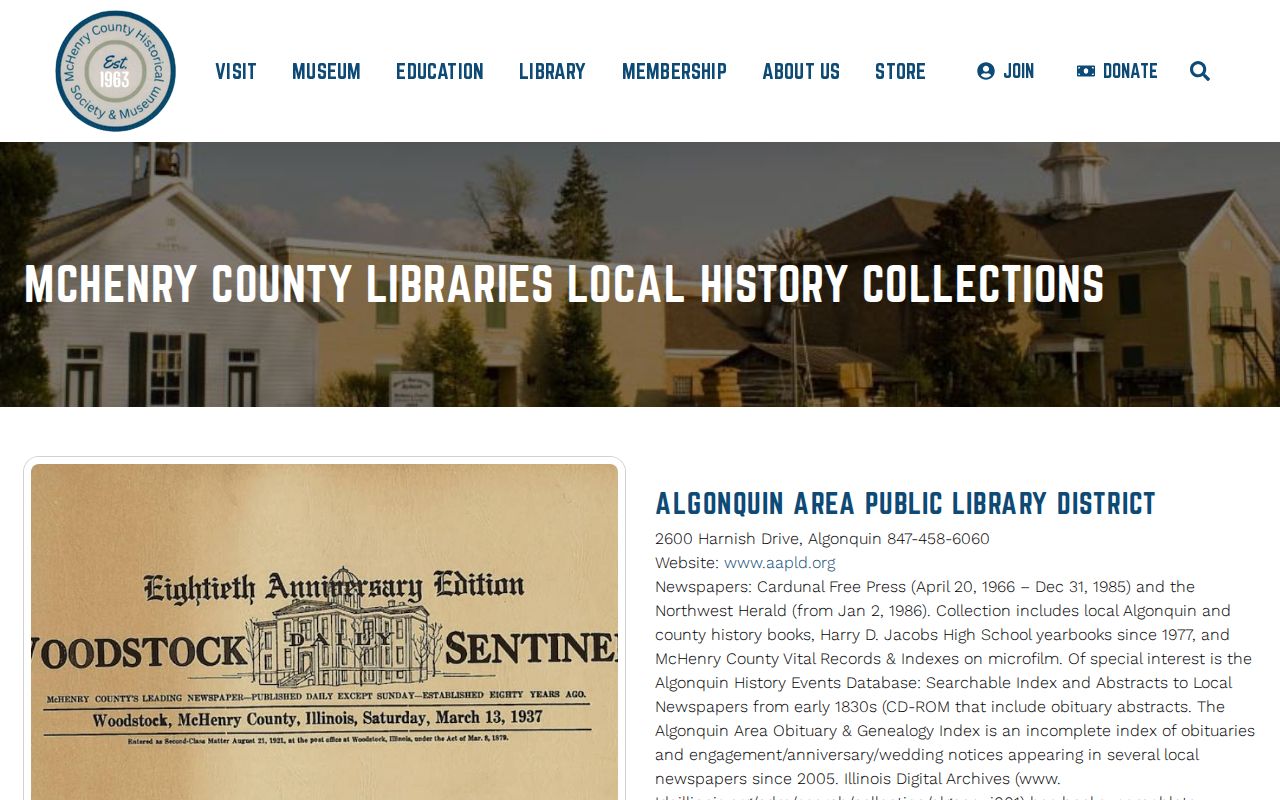
Choose a dated companion source instead of assuming one directory line describes an unchanged building.
Algonquin Newspapers Close Gaps
The Algonquin History Events Database indexes or abstracts news beginning in the early 1830s. Cardunal Free Press coverage runs from April 20, 1966 through December 31, 1985. Northwest Herald holdings begin January 2, 1986. The obituary and genealogy index starts in 2005 but is incomplete.
The Algonquin Arrow catalog record identifies a local publication beginning in 1896 and points toward Historic Commission holdings. It is a catalog lead, not a confirmed full digital run.
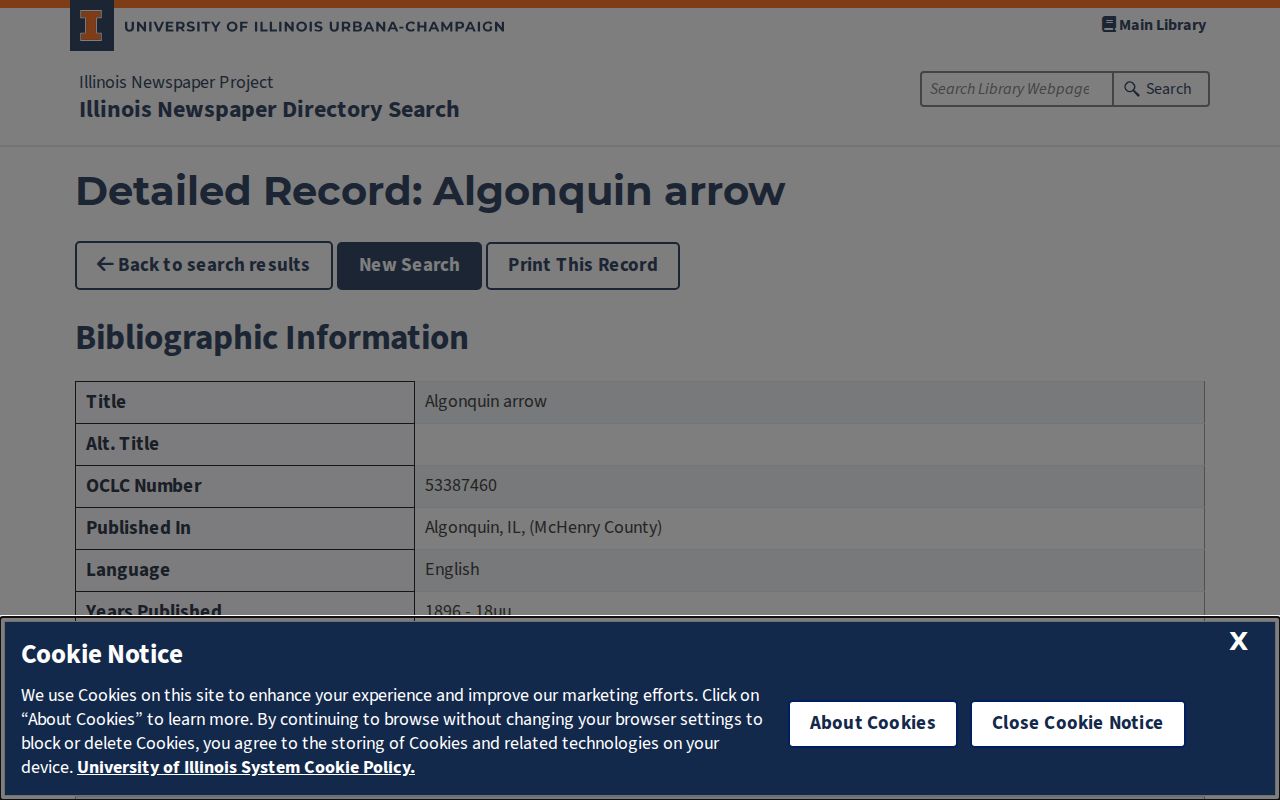
A notice can explain a gap, but verify an abstract against the issue when possible.
Algonquin Directory History in Dates
Several dates frame the local trail and show why no single shelf covers every era.
| 1877 | County directory supplies a resident and civic snapshot. |
|---|---|
| 1890 | Algonquin incorporates after 39 affirmative votes. |
| 1892 | Historical Directory and plat link names with geography. |
| 1929 | Sanborn map records street and building context. |
| 1977 | Haines suburban criss-cross run begins. |
| 2010 | McHenry's 1837-1848 commissioners' journal returns after private custody. |
The recovered journal is a rare records story. It shows why a catalog gap is not proof of destruction. Early road and county-seat decisions may explain why a family appears under a township, rather than Algonquin.
Trace Algonquin Families Between Years
Family history grows stronger when each city directory finding is paired with another record type. A directory is a dated listing, a census is a household schedule, and a deed is a title instrument. Their names can differ for good reasons.
- Start with a full name or exact address and a narrow period.
- Test the Haines criss-cross run, saving every spelling and address form.
- Move backward through local and county directories, logging missing years.
- Compare the 1929 Sanborn sheet and parcel legal description before carrying a number backward.
- Pair entries with 1900, 1910, 1920, or 1930 census schedules, then use newspapers and obituaries.
Also try Cornish's Ferry, Osceola, Algonquin Township, Fox River, and Cary/Algonquin. These labels reflect settlement and post-office history. They can reveal a household absent under the modern search phrase.
Keep the source page. An index is a lead; the dated directory page, census image, deed, or newspaper issue is the proof.
Algonquin City Directory Digital Clues
The Illinois Digital Archives collection for Algonquin and Lake in the Hills adds books, pamphlets, maps, photographs, and local history material supplied by AAPLD. It is not a single annual city directory run. Its value is the way a known surname, business, road, or subdivision can appear in several kinds of dated sources. Search the exact name first, then try initials, spelling variants, and the older place labels Cornish's Ferry and Osceola.
A catalog record and a scanned page serve different roles. The catalog identifies a title, holding institution, and broad date. The image supplies the printed name, page, heading, and nearby entries. Save both. A newspaper project record for the Algonquin Arrow points toward Historic Commission holdings, but no complete issue-level digital run was located. Ask AAPLD or the Historic Commission what survives before assuming the publication is fully searchable online.
Yearbooks and local papers can also bridge city directory gaps. Jacobs High School yearbooks begin with the school's 1977 era in the local research trail, while the Daily Herald, Northwest Herald, and other Illinois newspaper databases have their own coverage and access rules. A school or newspaper name match should be paired with a date, page, and one other source. That extra check guards against merging two Algonquin residents who share a name.